


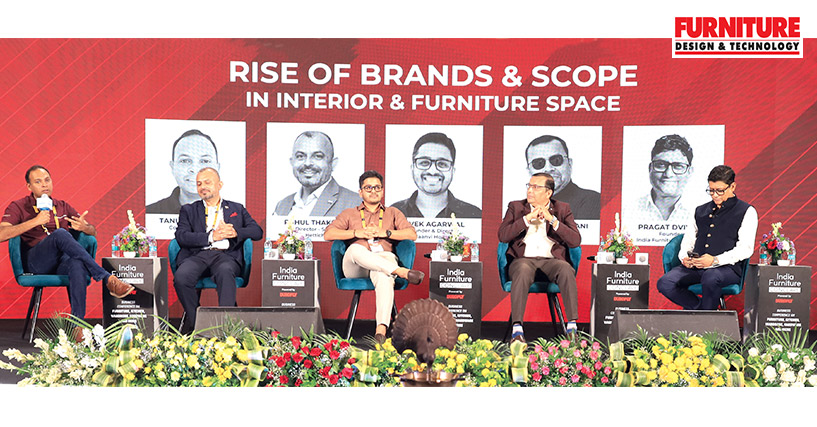
The Indian furniture and interior design industry stands at a fascinating crossroads. For decades, it has been a fragmented landscape dominated by unorganized local carpenters, regional players, and a significant reliance on imported goods. Yet, a new narrative is being written - one of ambition, trust, and strategic evolution. In our cover story, we spotlight the recent India Furniture Conclave, where a pivotal panel discussion moderated by Pragat Dvivedi, Founder of the India Furniture Conclave, delved into this very theme: “The Rise of Brands and Scope in Interior & Furniture Space.”
The Era Of The Anonymous Artisan Is Over. The Next Five Years Will See The Rise Of At Least 50 National Furniture Brands In India. - PRAGAT DVIVEDI Founder, India Furniture Conclave
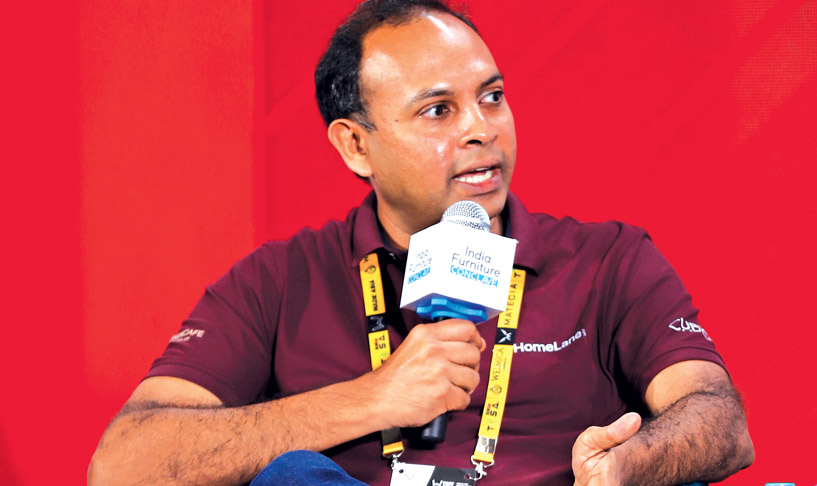
" In home interiors, a brand is not built by ambassadors or ads, but by the relentless delivery of trust. Everything else is just amplification."- TANUJ CHOUDHRY Co-Founder & COO Homelane
The conversation brought together a diverse set of voices to answer the burning question: Is creating a national furniture brand in India a pipe dream, or an inevitable reality? The panel featured Tanuj Choudhry, Co-Founder & COO of Homelane; Rahul Thakkar, Director of Sales at Hettich India; Vivek Agarwal, Founder & Director of Maanvi Homes; and Rakesh Khokhani, Managing Director, Nirvana Furnitures. Together, they unpacked the blueprint for building trust and scale in the new era of Indian furniture.
.jpg)
"You can have the best automation, but without trained people—from the carpenter to the designer—your brand has no soul and no future" . - RAKESH KHOKHANI Managing Director, Nirvana Furnitures
THE FOUNDATION OF A BRAND: IT ALL BOILS DOWN TO TRUST
The discussion immediately cut to the core of what a brand represents in this high-involvement, high spend category. For Tanuj Choudhry, Co-Founder & COO of Homelane, the answer is unequivocal.
“A brand is potentially not about who is endorsing you, it is not about winning design awards... the realisation for us has been, it is trust,” Choudhry stated. He elaborated that promises like 45-day deliveries are only powerful when consistently met. “Only when you keep that promise do you actually start getting called out as a brand.”
He candidly addressed the role of brand ambassadors, noting that while someone like M.S. Dhoni helps amplify communication, he “would never have associated with us if he was not sure that we could deliver on the brand.” The first layer of reliability, therefore, must be built brick by brick through execution.
This sentiment was echoed by Rakesh Khokhani, Managing Director, Nirvana Furnitures, a veteran with 25 years of experience. He emphasized that trust is built on a triad of deliverables: punctuality, execution, and detailing. However, he added a crucial layer to this foundation: Innovation. “If there is innovation, it truly enhances the entire subject,” asserted Khokhani, “Moving towards building a brand is inevitable - it all depends on the vision. We need to decide which segment we want the brand to grow in - the higher, mid, or lower segment. But ultimately, everyone is a brand. I’d also say that automation is extremely important; it enables us to achieve that vision, and that too is a crucial aspect.”
THE NEW GUARD: A DIGITAL-FIRST ASCENT AND A FIVE-YEAR BET
While trust is the bedrock, the pathways to building it are rapidly evolving. Vivek Agarwal, Founder & Director of Maanvi Homes, presented a compelling case study of a brand built in the digital age. Starting in 2019 amid scepticism that Indian brands could compete with imports, Maanvi Homes leveraged Instagram as its primary platform.
When we used to post on Instagram, people would often comment, saying, ‘You probably show one thing but do something else in reality.’ But we would tell them, ‘Please come to our factory and see for yourself,’” shared Agarwal This strategy of radical transparency, coupled with a focus on personalization and educating customers on maintenance in the Indian context, paid off. He boldly predicted a seismic shift in the near future, a bet he places on changing consumer needs.“I would say definitely [the rise of brands] is going to happen in the next five years... I can bet you on that.”
Moderator Pragat Dvivedi summarized the key points, adding that design and delivery had played an important role in the success of Maanvi Homes. The brand was able to draw people’s attention to its base in Surat despite strong competition from Delhi and Mumbai, which are considered major furniture hubs. Nevertheless, social media played a significant role in the brand-building exercise.
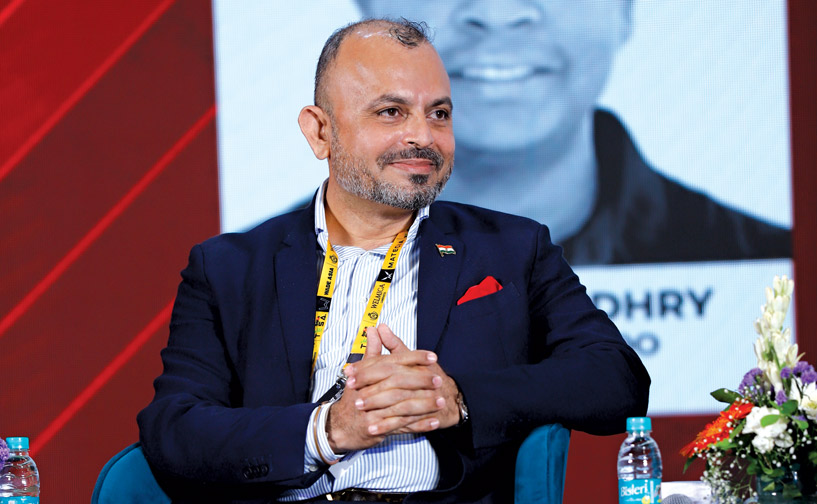
" Stop looking for partners within the furniture industry. To build a true brand, you need fresh blood with new processes and a different mindset" .- RAHUL THAKKAR Director-Sales, Hettich
THE ECOSYSTEM VIEW: PARTNERS, PROCESSES, AND PEOPLE
Rahul Thakkar, Director-Sales at Hettich, provided a strategic, ecosystem-level perspective. He argued that building a national brand requires moving beyond traditional methods and focusing on three critical pillars: the right product quality, the right partners, and a robust service infrastructure.
“I really never made any partner in India when I was creating a brand who are from the furniture industry. I ask people from different institutes to join us,” Thakkar revealed, highlighting the need for fresh, outside-the-box thinking.
On the critical question of investment and finding the right franchise partners, the panel had nuanced views. Tanuj Choudhry felt that while finding aligned partners is challenging, it’s not unique to the furniture industry and is a hurdle every organized sector eventually overcomes. “It’s not just about finding other partners. It is also important to ask What kind of partners are we? Are they being able to find a partner in us who they can trust? If we are working, for example, with a brand like Hettich, we are a partner for them. Are we being able to deliver to them the promise that we are offering? Can they trust us that, you know, the kind of projects we will be doing, will it add more to their brand? I think slowly and steadily that’s beginning to pick up. Moreover, I think one clear aspect of category organization or brand building is brands have to collaborate. It’s very difficult for one brand to go and build it out all by itself.
Brand building requires capital influx Vivek Agarwal, emphasized that scaling a manufacturing brand does require significant capital, but pointed to a promising trend: growing investor interest. “We are seeing how many people are calling us like, sir, you take the investment, just give us the stake. It is happening,” he said
Rahul Thakkar presented an almost contrarian view on capital, suggesting that with the right model, the financial burden can be significantly reduced. He emphasized that money is not the problem - the real challenge lies in reach, connection, trust, awareness, and processes. According to him, the key is to find ways to optimize or share investments from both sides through collaboration. While partnerships can be built, what often causes setbacks is dissatisfaction with after-sales service, which brings businesses back to where they started. Hence, establishing strong processes and infrastructure becomes crucial.
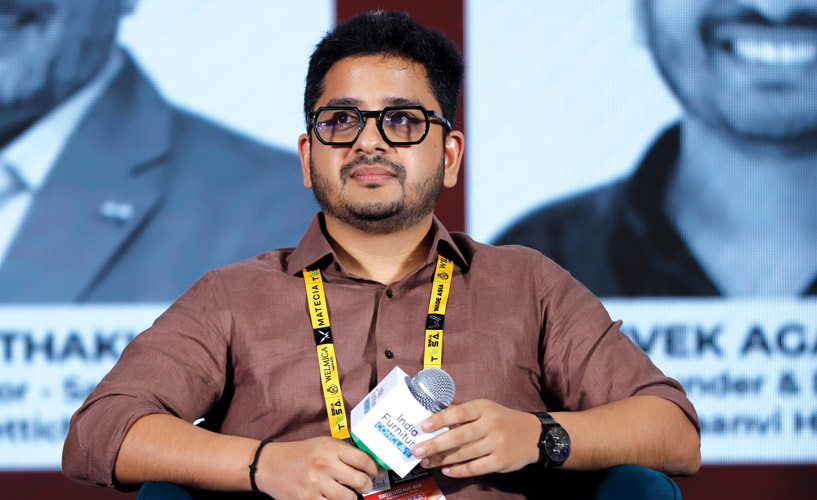
" We forced customers to look beyond Delhi and Mumbai by inviting them to our factory in Surat. Transparency built our brand, not our location." - VIVEK AGARWAL Founder & Director, Maanvi Homes
THE ROAD AHEAD: CLARITY, VISION, AND COLLABORATION
As the discussion concluded, the panelists agreed on the prerequisites for success. Tanuj Choudhry stressed the importance of clarity - knowing exactly which customer segment you are serving. Rakesh Khokhani and Vivek Agarwal highlighted the need for a clear vision and willingness from the top management.
Tanuj added, “Where the money is spent matters - which is why clarity is crucial. When we built HomeLane, we decided to focus on creating home interiors for the urban, mass-affluent Indian segment. Our brand spend has typically increased when we haven’t delivered consistently, because that’s when you have to persuade people to stay with your brand. Being consistent may seem boring, but it’s essential. Clarity and consistency ultimately ensure that you spend less on building a brand.”
Moderator Pragat Dvivedi synthesized the optimism in the room, reflecting on the journey of other industries like panels and the transformative role of early players like Pepperfry and Urban Ladder in creating awareness. “I promise we will be able to deliver 50 brands in next 5 years,” Dvivedi declared, capturing the collective conviction of the panel. The rise of brands in the Indian furniture and interior space is no longer a question of ‘if’ but ‘how’ and ‘when’. The blueprint is clear: build unshakeable trust through delivery, harness digital tools for reach and transparency, forge strategic partnerships, invest in training and automation, and above all, possess a crystal-clear vision. The next five years promise to be the most transformative chapter in the story of Indian furniture, as a new generation of brands rises to meet the aspirations of a new India.
Furniture Design India and the magazine FURNITURE DESIGN & TECHNOLOGY (FDT magazine) are from the trusted 22-year-old media house of SURFACES REPORTER and PLY REPORTER.
FDT is a B2B monthly bilingual magazine from India that shares the pulse of the furniture business in India and connects the manufacturers, OEMS, product designers, architects, showrooms, designers and dealers.
Read More
 Editorial
 Editorial
© 2026 Furniture Design and Technologies.. All Rights Reserved. Developed by eyeQ Advertising
