



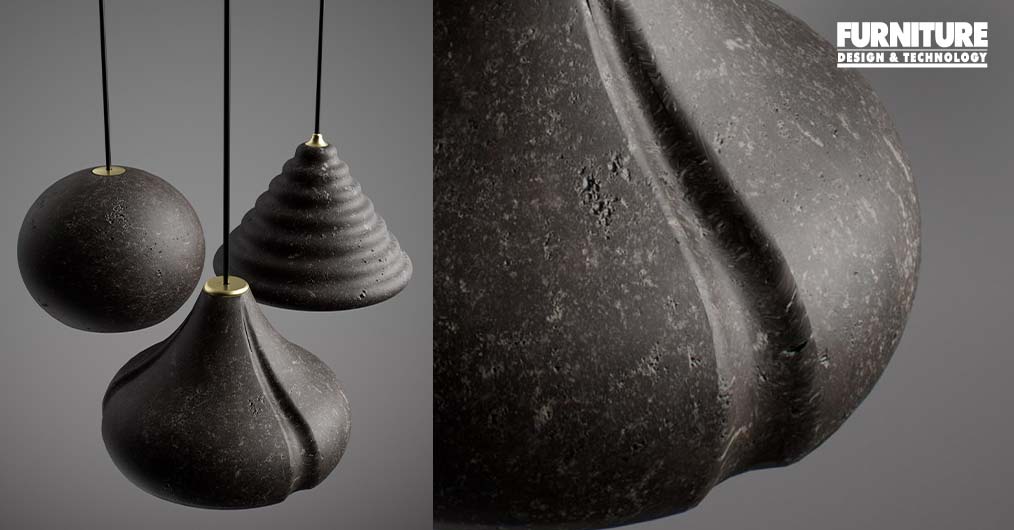
Italian designers Alberto Meda and his son Francesco Meda recently collaborated on a distinctive trio of pendant lights for Foscarini, introducing an innovative approach to working with volcanic stone. The collection, comprising the Alicudi, Filicudi and Panarea lamps, draws both its material inspiration and its names from Italy’s volcanic Aeolian Islands. At the heart of the project is a newly developed, patented composite material that incorporates finely ground lava stone bound together with a natural binder, allowing the designers to rethink how this ancient material can be shaped and experienced. Learn on FURNITURE DESIGN AND TECHNOLOGY (FDT) how even sculptural objects can celebrate material innovation.
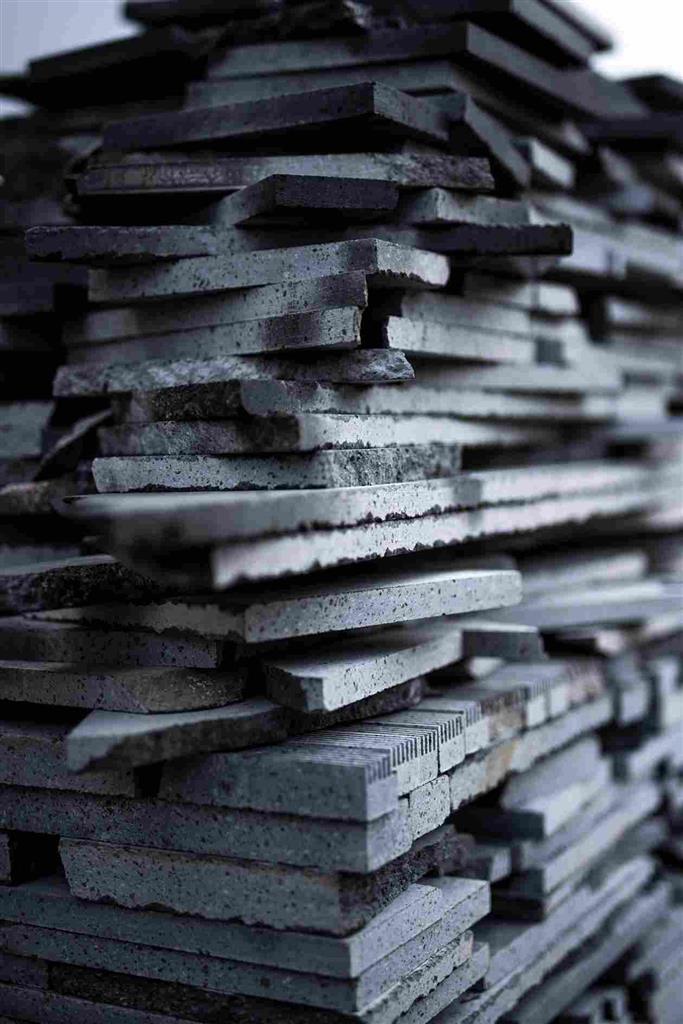
While the lamps retain the raw, tactile appearance traditionally associated with lava, marked by porous textures, crater-like surfaces and a sense of geological depth, the composite significantly alters its physical behaviour. By reducing the weight of the material by approximately 30 per cent, the new formulation makes it possible to achieve forms that would be extremely difficult, if not impossible, using conventional stone working methods such as chiselling or CNC cutting. Instead of rigid, angular geometries, the Medas were able to explore softer, flowing silhouettes with gently rounded profiles, produced through moulding rather than carving.
The restrained geometry of the lamps ensures that they can be arranged individually or in clusters, maintaining visual coherence while still offering variation across the series. The composite material was developed by Ranieri, a Naples-based company located near Mount Vesuvius and known for its expertise in volcanic stone. Traditionally, Ranieri processes solid lava blocks into architectural surfaces and furniture using precision-controlled machinery. However, this process generates a considerable amount of stone waste in the form of chips and fragments. Seeking a more sustainable approach, the company started experimenting with ways to reuse these remnants, eventually developing a method to pulverise the lava into powders of varying grain sizes and combine them with an organic binding agent.

While conventional lava stone panels require a thickness of 15-20mm to prevent cracking, the poured lava composite achieves comparable impact resistance at just 8-10mm. Recognising the creative potential of this material, Foscarini invited Alberto and Francesco Meda to design a lighting collection that would highlight its defining characteristics. By adjusting grain size and limiting the amount of binder, the designers were able to accentuate the natural imperfections of the material. From the exterior, the lamps appear uniformly black, reinforcing their sculptural presence and drawing attention to their textured surfaces. Yet each piece is subtly different. Although industrial moulds are used, variations in temperature, gravity and pouring angle ensure that no two lamps are exactly alike, with unique bumps, cavities and surface nuances emerging in each shade.
Image credit: Foscarini
Furniture Design India and the magazine FURNITURE DESIGN & TECHNOLOGY (FDT magazine) are from the trusted 22-year-old media house of SURFACES REPORTER and PLY REPORTER.
FDT is a B2B monthly bilingual magazine from India that shares the pulse of the furniture business in India and connects the manufacturers, OEMS, product designers, architects, showrooms, designers and dealers.
Read More
 Editorial
 Editorial
© 2026 Furniture Design and Technologies.. All Rights Reserved. Developed by eyeQ Advertising


